Rethinking Scientific Practice in the Age of Artificial Intelligenc
Abstract
Artificial intelligence (AI) is reshaping how research is conceived, conducted, and communicated across fields from chemistry to biomedicine. This commentary examines how AI is transforming the research workflow. AI systems now help researchers manage the information deluge, filtering the literature, surfacing cross-disciplinary links for ideas and collaborations, generating hypotheses, and designing and executing experiments. These developments mark a shift from AI as a mere computational tool to AI as an active collaborator in science. Yet this transformation demands thoughtful integration and governance. In this opinion paper, we argue that at this time AI must augment but not replace human judgment in academic workflows such as peer review, ethical evaluation, and validation of results. This paper calls for the deliberate adoption of AI within the scientific practice through policies that promote transparency, reproducibility, and accountability.
Keywords:
Artificial Intelligence, Science, Collaboration, Hypothesis Generation, Policy
Citation:
Maksim E. Eren and Dorianis M. Perez. 2026. Rethinking Scientific Practice in the Age of Artificial Intelligence. ACM AI Lett. Just Accepted (March 2026). https://doi.org/10.1145/3803866
BibTeX:
@article{10.1145/3803866,
author = {Eren, Maksim E. and Perez, Dorianis M.},
title = {Rethinking Scientific Practice in the Age of Artificial Intelligence},
year = {2026},
publisher = {Association for Computing Machinery},
address = {New York, NY, USA},
url = {https://doi.org/10.1145/3803866},
doi = {10.1145/3803866},
abstract = {Artificial intelligence (AI) is reshaping how research is conceived, conducted, and communicated across fields from chemistry to biomedicine. This commentary examines how AI is transforming the research workflow. AI systems now help researchers manage the information deluge, filtering the literature, surfacing cross-disciplinary links for ideas and collaborations, generating hypotheses, and designing and executing experiments. These developments mark a shift from AI as a mere computational tool to AI as an active collaborator in science. Yet this transformation demands thoughtful integration and governance. In this opinion paper, we argue that at this time AI must augment but not replace human judgment in academic workflows such as peer review, ethical evaluation, and validation of results. This paper calls for the deliberate adoption of AI within the scientific practice through policies that promote transparency, reproducibility, and accountability.},
note = {Just Accepted},
journal = {ACM AI Lett.},
month = mar,
keywords = {Artificial Intelligence, Science, Collaboration, Hypothesis Generation, Policy}
}
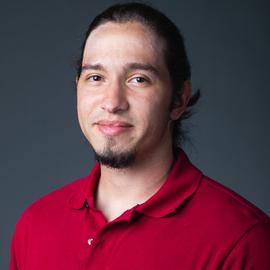
Maksim E. Eren
Scientist
Maksim E. Eren is a Scientist at Los Alamos National Laboratory, specializing in machine learning and artificial intelligence for large-scale data science applications.